
TURTLE BAY
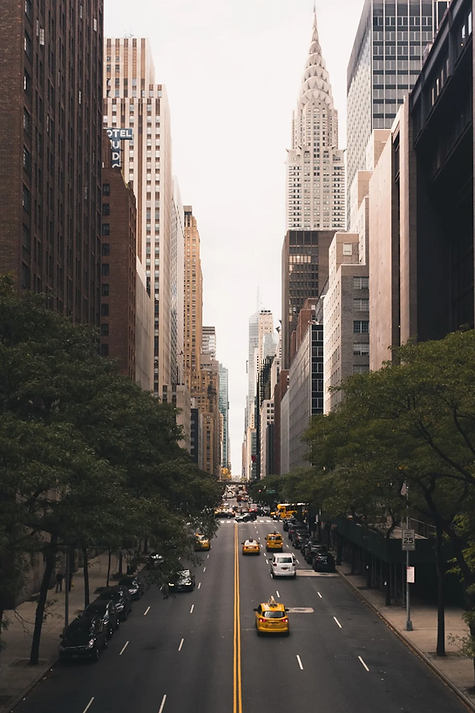
Located in historic Turtle Bay one block north of the United Nations Secretariat Building, 860/870 United Nations Plaza is walking distance from midtown offices and is surrounded by museums, fine restaurants, supermarkets, specialty food stores, cafés, big-brand retailers and quirky mom-and-pop shops.
One of its biggest assets is its location: The entrance to the FDR Drive is just moments away, meaning that you can get into and out of the city quickly and easily — a dream for commuters.
In 2023, the East Midtown Waterfront project successfully "closed the loop" of the nearby Greenway, meaning cyclists, runners and pedestrians from 860/870 have a beautiful 32-mile esplanade to enjoy.
United Nations Plaza has only one neighbor: the adjacent children-only MacArthur Park. Dogs can get outdoor exercise at the expansive dog run in Peter Detmold Park, located right across the street from United Nations Plaza.
In addition to the numerous specialty-food stores in the neighborhood, foodies will appreciate the weekly greenmarket at nearby Dag Hammarskjold Plaza on Second Avenue and 47th Street, with its organic produce vendors, fishmonger and artisanal bakers.
A SHORT HISTORY OF THE UN PLAZA NEIGHBORHOOD
By 860/870 resident Pamela Hanlon, author of Manhattan’s Turtle Bay: Story of a Midtown Neighborhood
The twin towers of 860/870 United Nations Plaza rise in the heart of Manhattan’s Turtle Bay, an East Midtown neighborhood named for a crescent-shaped cove off the East River that, until the mid-1800s, stretched from about 45th Street to 48th Street. A small stream, Turtle Creek, flowed into the cove from its source at the southeast corner of what is now Central Park.
During the 1700s, the land near the cove was dotted with large farms and prosperous estates, most notably Turtle Bay Farm, from about 41st Street to 49th Street, and the Beekman Farm, just to the north. Their western border was the famous Eastern Post Road, running approximately along what today is Third Avenue.
The Beekman family’s mansion, called Mount Pleasant, stood on their property’s highest ground, at what today is the intersection of First Avenue and 51st Street. Historically, the Beekmans' land is probably best known for its role during the Revolutionary War, when it was taken over by the British and was the site of the trial and sentencing of the patriot spy Nathan Hale.
Stories abound about notable residents living in the area during the 1800s. In the 1840s, newspaper publisher Horace Greeley owned seven acres between 48th and 49th Streets, and author and poet Edgar Allen Poe lived for a time near 47th Street. Poe was known to row out to the two rocky islets south of Blackwell’s Island (now Roosevelt Island), and swim off their shores.
After 1850, the area’s farming came to an end when New York City’s newly devised straight-line street grid construction made its way northward from downtown Manhattan. Turtle Bay Farm and Beekman Farm were broken up, and new blocks developed with rows of brownstone houses that became home to well-to-do families.
But that era was not to last. Construction of the streets had disturbed the flow of the Turtle Creek, and it began to back up, turning the area swampy and unhealthy. As a remedy, the city built an underground drainage system and filled in the little Turtle Bay. Almost overnight, the riverfront landfill became an industrial site, home to stockyards, slaughterhouses, breweries and a coal yard. The pretty brownstones were turned into rooming houses for the workers on the site. And then, elevated rail lines — the “els” — were built over Second and Third Avenues, turning surrounding blocks dark and dirty. With that, East Midtown began a long period of decline, not to be reversed until the next century.


The transformation of the area began in 1919, when a wealthy woman with an adventurous spirit, Charlotte Hunnewell Martin, bought a group of 20 old brownstones on 48th and 49th streets between Second and Third Avenues, and converted them into townhouses surrounding a central garden. She called her development “Turtle Bay Gardens.” The charming houses almost immediately attracted some of the city’s most accomplished and illustrious names — lawyers, writers, and actors. Over the years, residents have included actress Katharine Hepburn, essayist E.B. White, journalist Dorothy Thompson, the Broadway legend Stephen Sondheim, music’s Bob Dylan, and many others.
Meanwhile, Beekman Place drew attention after the well-known landscape architect, Ellen Biddle Shipman, bought a brownstone at the north corner of 50th Street and the East River and converted it into her home and office. Development in the enclave soon flourished.
Finally, the neighborhood would get a huge boost when the city dismantled the Second and Third Avenue els, opening up the streets that for decades had been under the shadow of the overhead rail lines.
Still, in the early 1940s, the dirty industrial site remained along the East River. But that would change suddenly when, in late 1946, John D. Rockefeller Jr. offered to purchase six blocks of riverfront south of 48th Street, and donate it to the newly formed United Nations for its world headquarters. Soon, the site was cleared and, by 1952, the UN complex of buildings was completed. A team of international architects, chaired by New Yorker Wallace Harrison, designed the site’s three main structures — the tall Secretariat, and the General Assembly and Conference buildings. Suddenly, East Midtown was catapulted into the New York City spotlight, with a fresh and forward-looking reputation.
But UN architect Harrison was not quite finished with his designs for the area. Originally, he had envisioned a fourth major UN building at the north end of the UN site, just south of 48th Street, to house member-states’ diplomatic missions. He believed this would cordon off the property, making it feel self-contained. But the UN member-states didn’t want the additional building. And so, some years later, Harrison’s firm, Harrison and Abramovitz, designed 860/870 United Nations Plaza and its office base, 866, to rise on land just north of the UN property. His vision was finally realized. In fact, the original offering brochure for 860/870 United Nations Plaza points out that the apartment complex completes “the architectural concept envisioned in the original plans for the United Nations.”
Since the late 1960s, when 860/870 opened, many other high-rise apartment buildings have gone up in the neighborhood, joining the brownstones of the mid-1800s and some notable 1920s apartment buildings. But with its location just north of what was once the Turtle Bay cove, and overlooking the modern UN buildings, 860/870 United Nations Plaza will always hold its own unique place in the history of the area.


A Self-Guided Walking Tour of Neighborhood Landmarks
Since New York City’s Landmarks Law was enacted some 60 years ago, more than 1,500 sites throughout the city have been designated as landmarks, to be preserved for their historical, cultural, or aesthetic value. Thirteen of the landmarks are located within the Turtle Bay neighborhood (43rd to 53rd St., Lexington Ave. to the East River), of which 860/870 United Nations Plaza is a part. Residents and friends can easily take a self-guided “walking tour” of the Turtle Bay landmarks, using the descriptions below. The tour starts on East 53rd Street and wends its way south to East 44th Street. At a leisurely pace, the walk takes approximately 90 minutes.
312 and 314 East 53rd St., between First and Second Avenues:
Two 1860s clapboard houses: These twin side-by-side houses were built in 1866, just before a change in the city’s fire codes outlawed wood frame houses. In the French Empire style – popular in New York after the Civil War — each is two stories tall, with a high brick basement and mansard roofs.
242 East 52nd St., between Second and Third Avenues:
Rockefeller Guest House: This structure was built in 1950 for Mrs. John D. Rockefeller III as a space for her modern art collection. The architect, Philip Johnson, was relatively unknown at the time, but would go on to great fame. One of the earliest buildings in the city to reflect the modernist movement, it was donated to the Museum of Modern Art in 1955 and later sold.
SE corner of Lexington Avenue and 51st Street:
Summit Hotel: This hotel – today “FOUND” housing – first opened in 1961. It was designed by Morris Lapidus, architect of some 200 hotels, known to be unusual and always lavish. The Summit was notable for its “S-shape” and its enormous sign of seven oval disks running down its northwest corner.
No. 23 Beekman Place, between 50th and 51st Streets:
Paul Rudolph House: This mid-1800s brownstone was home to legendary actress Katherine Cornell in the early 1900s. In the 1970s, architect Paul Rudolph bought the house and modified it with a multi-level penthouse and interiors of mirrored walls and glass floors. He died in 1997, and the interior has since been renovated, but the exterior remains virtually unchanged.
NE corner of Mitchell Place (49th Street) and First Avenue:
Panhellenic Tower: Opened in 1929, this hotel (now, the Beekman Tower) was designed by John Mead Howels as a hotel for women. Known for its Gothic-inspired Art Deco exterior ornament, it was converted for use by both women and men in the 1930s. Its rooftop bar originally was a solarium.
228 to 246 East 49th St. and 229 to 247 East 48th St.(20 houses between Second and Third Avenues):
Turtle Bay Gardens: Distinguished by cast iron turtles adorning most of the exterior gates to the houses, Turtle Bay Gardens was the creation of Charlotte Hunnewell Martin, who, in 1919, bought 20 1850s brownstones on the two streets and converted them to townhouses with a lushly landscaped interior garden. The complex has been home to many creative residents over the years, from Katherine Hepburn to Stephen Sondheim. (Public entrance to the garden is not allowed.)
211-215 East 49th St., between Second and Third Avenues:
Amster Yard: This complex of buildings surrounding a courtyard was created by a well-known interior designer of the mid-1940s, James “Jimmy” Amster. He bought a group of run-down 1800s buildings and converted them into homes and offices for himself and some well-known designers of the time. Historically, the site had been a Boston stagecoach stop on the old Eastern Post Road. Today the complex is home of the Cervantes Institute. (Courtyard is open to the public weekdays and Sat. mornings.)
219 East 49th Street, between Second and Third Avenues:
Morris Sanders Studio and Apartment): Built in 1935, this modern-style house was designed by architect Morris Sanders, using glass and dark blue bricks. Sanders was known primarily for the design of modular furniture and ceramics. He used the house as his home and office.
211 East 48th St., between Second and Third Avenues:
Lescaze House: Designed by architect William Lescaze in 1933, this house is known as the first truly “modern” residence in New York City. Altered from an 1865 brownstone purchased by Lescaze, its use of exterior glass bricks was controversial at the time. He used the house as his home and office.
333 East 47th St., between First and Second Avenues:
Japan Society: Opened in 1971, the Japan Society building is a relatively new city landmark. Land for the building was donated by John D. Rockefeller III, who had a long association with Japan, including work on post-World War II planning in Japan. The building, noted for both its exterior and interior spaces, was designed by Junzo Yoshimura, and is considered a work of late modernism reflecting Japanese architectural heritage.
307 and 310 East 44th St., between First and Second Avenues:
Beaux-Arts Apartments: Located on both sides of 44th Street, these apartments, designed by Raymond Hood in the 1930s, are an example of the modern phase of the Art Deco movement. Originally financed by a syndicate of architects, they were designed as housing for artists, but marketed to others as well.
304 East 44th St., between First and Second Avenues:
Beaux-Arts Institute of Design: Built in 1928, and designed by Frederick Hirons, this building is Art Deco design, noted for its terra cotta plaques designed by Rene Chambellan, the sculptor who also designed the exterior decoration of the Panhellenic Tower on First Avenue/Mitchell Place (see above). Today it is the Egyptian mission to the UN.
Note: A full description of each landmark can be accessed by using the landmark’s name at www.nyc.gov/site/lpc/designations/designation-reports.page.